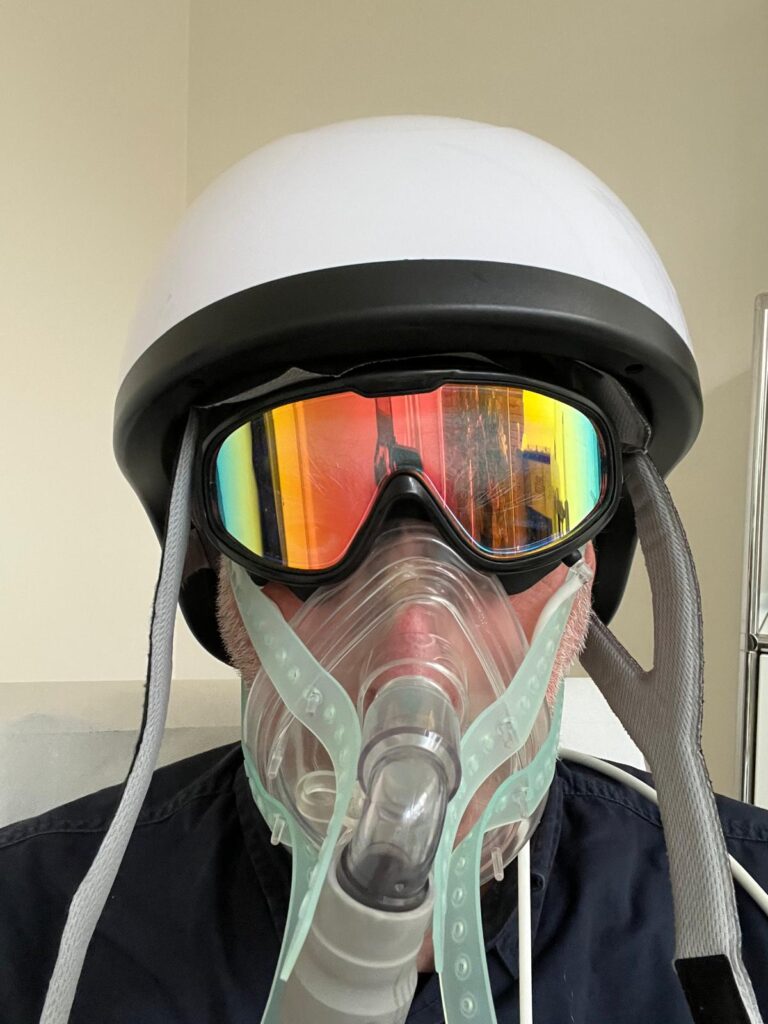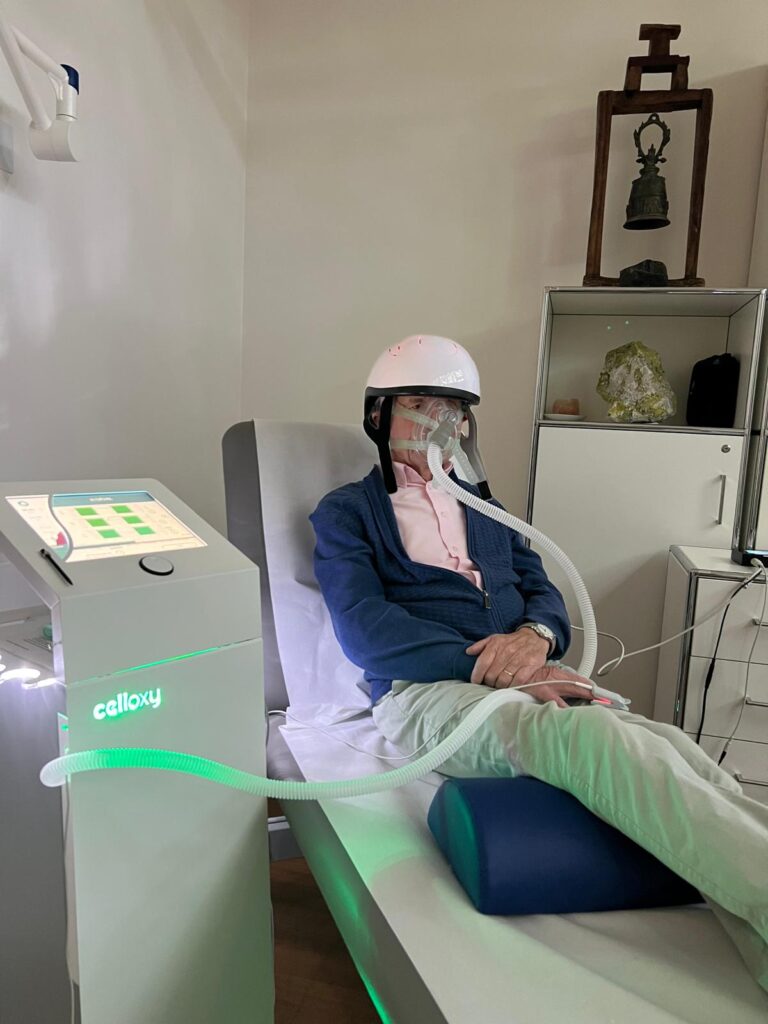
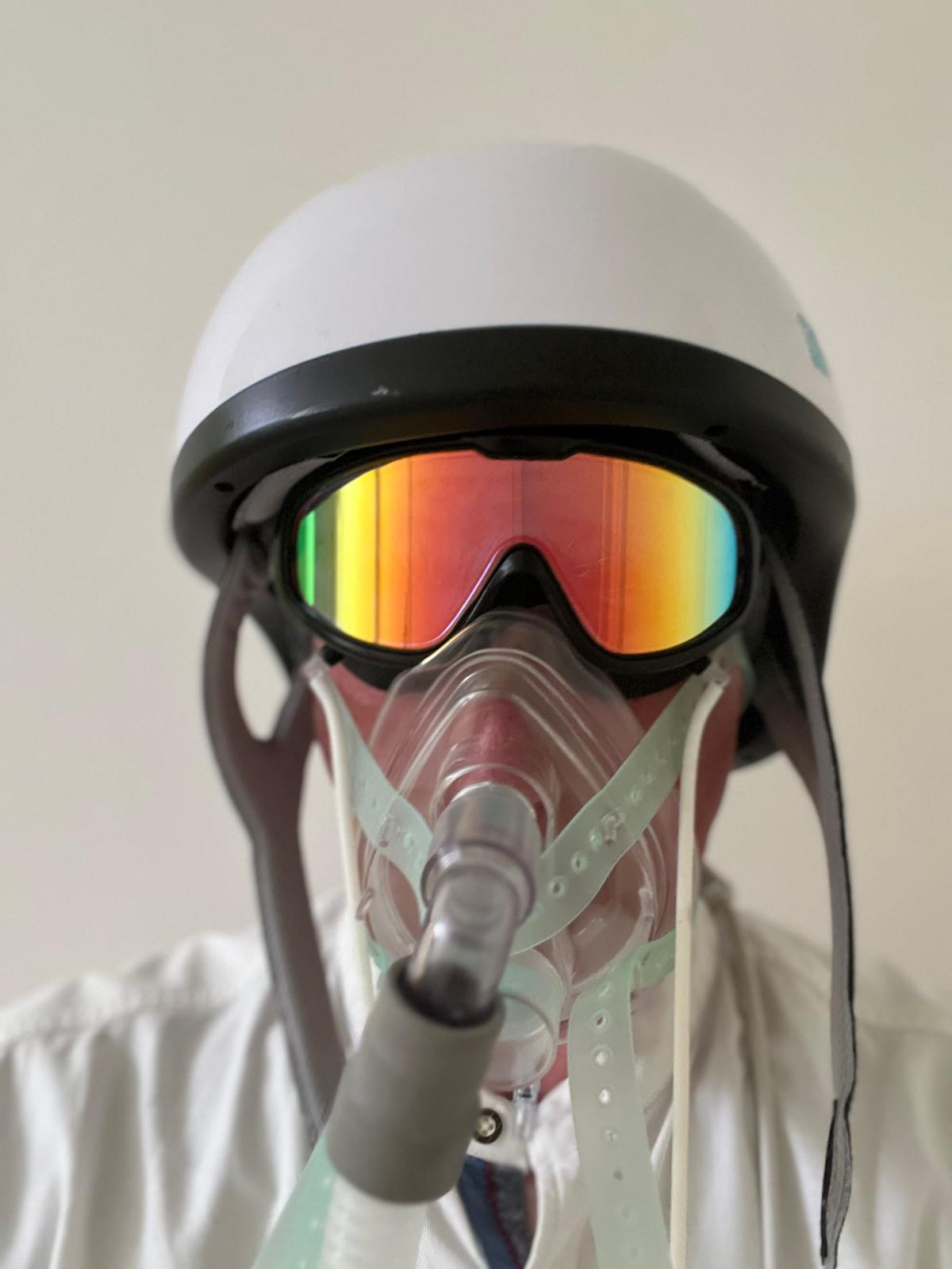
During IHHT, you are exposed to controlled alternations of air with low oxygen content (hypoxia), normal oxygen content (normoxia) and high oxygen content (hyperoxia) via a mask. This process, which takes place while you are sitting or lying down in a relaxed position, lasts an average of 30 to 60 minutes. This ‘controlled stress stimulus’ activates a recovery response in the body, similar to the effect of exercise or mountain hiking, but without physical exertion. HIF-1 (Hypoxia Inducible Factor 1), a substance produced naturally by the body, plays a key role in this process: among other things, it stimulates the production of new capillaries and improves metabolic processes such as fat burning and glucose regulation.
IHHT (Intermittent Hypoxia-Hyperoxia Therapy) is an innovative and scientifically researched form of treatment that focuses on improving the functioning of the mitochondria – the powerhouses of our body's cells. They are found in all your cells and ensure that food and oxygen are converted into energy, ATP. You need this energy to move your muscles, keep your brain functioning, maintain healthy organs and recover when you are ill.
Every cell contains hundreds to thousands of mitochondria, which are responsible for producing ATP, the body's main source of energy. When these structures are disrupted by illness, stress or ageing, our vitality declines and a variety of complaints can arise, ranging from fatigue and sleep problems to disturbances in the nervous system, immune system or hormonal balance.
Clinical studies, including those by Prof. V. Serebrovska and Dr. I.M. Mankovska (Int. J. Physiol. Pathophysiol. 2015), demonstrate that IHHT can improve mitochondrial function, contributing to increased energy, better sleep, reduced pain, and a stronger immune system.
A treatment programme usually consists of 10 to 15 sessions, after which maintenance treatments can be initiated. IHHT is painless, safe and a valuable addition to regular treatments, with the aim of strengthening the body from the ground up.
–
If you have any questions about this therapy, please do not hesitate to contact us.
Glazachev O, Kopylov P, Susta D, Dudnik E, Zagaynaya E. Adaptations following intermittent hypoxia-hyperoxia training in coronary artery disease patients: a controlled study. Clin Cardiol. 2017 Jun;40(6):370-376. doi: 10.1002/clc.22670. Epub 21 March 2017. PMID: 28323322; PMCID: PMC6490434.
Behrendt T, Bielitzki R, Behrens M, Jahns LM, Boersma M, Schega L. Acute psycho-physiological responses to submaximal constant-load cycling under intermittent hypoxia-hyperoxia vs. Hypoxia-normoxia in young males. PeerJ. 4 October 2024;12:e18027. doi: 10.7717/peerj.18027. PMID: 39376227; PMCID: PMC11457877.
Bayer U, Likar R, Pinter G, Stettner H, Demschar S, Trummer B, Neuwersch S, Glazachev O, Burtscher M. Intermittent hypoxic-hyperoxic training on cognitive performance in geriatric patients. Alzheimer's Dement (N Y). 8 February 2017;3(1):114-122. doi: 10.1016/j.trci.2017.01.002. PMID: 29067323; PMCID: PMC5651371.
Doehner W, Fischer A, Alimi B, Muhar J, Springer J, Altmann C, Schueller PO. Intermittent Hypoxic-Hyperoxic Training During Inpatient Rehabilitation Improves Exercise Capacity and Functional Outcome in Patients With Long Covid: Results of a Controlled Clinical Pilot Trial. J Cachexia Sarcopenia Muscle.
2024 Dec;15(6):2781-2791. doi: 10.1002/jcsm.13628. Epub 2024 Nov 19. PMID: 39559920; PMCID: PMC11634465.
Glazachev OS, Kryzhanovskaya SY, Zapara MA, Dudnik EN, Samartseva VG, Susta D. Safety and Efficacy of Intermittent Hypoxia Conditioning as a New Rehabilitation/Secondary Prevention Strategy for Patients with Cardiovascular Diseases: A Systematic Review and Meta-analysis. Curr Cardiol Rev. 2021;17(6):e051121193317. doi: 10.2174/1573403X17666210514005235. PMID: 33992064; PMCID: PMC8950503.
Afina AB, Oleg SG, Alexander AB, Ines D, Alexander Yu S, Nikita VV, Denis ST, Daria GG, Zhang Y, Chavdar SP, Dmitriy VG, Elena AS, Irina VK, Philippe Yu K. The Effects of Intermittent Hypoxic-Hyperoxic Exposures on Lipid Profile and Inflammation in Patients With Metabolic Syndrome. Front Cardiovasc Med. 27 August 2021;8:700826. doi: 10.3389/fcvm.2021.700826. PMID: 34513946; PMCID: PMC8429814.
Disclaimer: All therapies offered by us are considered complementary to the regularly indicated medical treatment.
Appointments can be cancelled or rescheduled free of charge up to 24 hours in advance. If you cancel within 24 hours or fail to attend the appointment, you will be charged for the cost of the consultation.